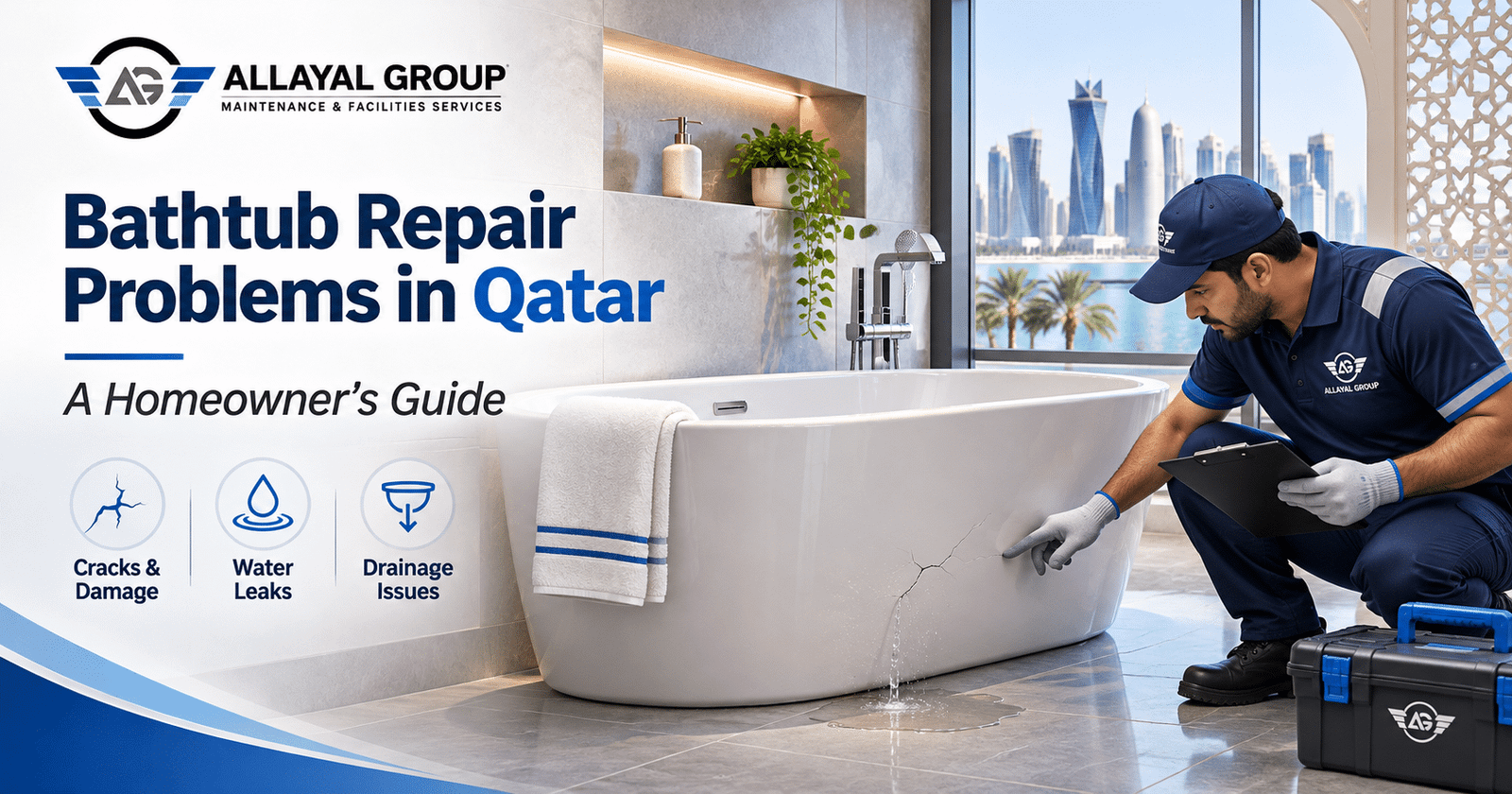
A cracked bathtub, a leaking edge, or a damaged surface can turn a normal bathroom routine into a costly problem. Many homeowners notice small marks on their bathtub but do not know whether the damage needs cleaning, repair, or complete replacement.
Bathtub repair problems in Qatar can affect apartments, villas, hotels, and rental properties. Common issues include hairline cracks, chipped enamel, water leakage, faded surfaces, and damaged sealant. Some problems affect appearance, while others allow water to reach the floor or walls.
For homeowners looking for bathtub repairing in Doha or bathtub repair in Al Rayyan, identifying the problem early can help prevent further damage.
This guide explains the common signs of bathtub damage, what causes these problems, how repairs work, and when professional inspection is necessary. It also covers maintenance tips and the factors that affect repair costs.
What Are the Most Common Bathtub Repair Problems in Qatar?
Bathtubs can develop several types of damage through daily use, accidental impact, poor installation, or worn materials.
The most common problems include:
- Bathtub cracks: Thin or deep cracks in the tub surface.
- Water leakage: Water escaping through damaged seals, drains, joints, or the bathtub itself.
- Chipped surfaces: Small pieces of enamel or surface coating breaking away.
- Discoloration: Yellow, brown, or dark stains that cleaning may not remove.
- Peeling coatings: Old surface finishes separating from the bathtub.
- Soft or unstable areas: Sections of the bathtub that move more than expected.
- Damaged sealant: Gaps between the bathtub and surrounding tiles or walls.
These problems do not always require the same solution. A surface stain may need cleaning, while a structural crack may require repair or replacement.
Understanding the type of damage is the first step toward choosing the correct treatment.
7 Signs Your Bathtub Needs Repair
Bathtub problems often start with small changes. Some signs are easy to see, while others become noticeable during daily use.
1. Visible Cracks on the Bathtub Surface
A crack may appear as a thin line near the drain, along the side, or across the bottom of the bathtub.
Hairline cracks can affect only the surface coating. Deeper cracks may extend into the bathtub material and allow water to pass through.
Cracks that grow, change shape, or appear near a moving section need professional inspection.
Learn more in our guide to bathtub crack repair in Qatar.
2. Water Collecting Around the Bathtub
Water on the floor after a bath may indicate a damaged seal, a leaking drain connection, a plumbing issue, or a crack.
First, check whether water has escaped over the bathtub edge.
If the floor becomes wet repeatedly without an obvious spill, stop using the bathtub until the source is identified.
Water can enter hidden spaces under tiles and around walls. Delaying inspection may increase the amount of repair work needed.
3. Chipped or Damaged Bathtub Enamel
A hard object falling into the bathtub can damage its surface.
Chips may appear around the drain, on the rim, or inside the bathing area. The damaged section can feel rough and may expose the underlying material.
A small chip may be suitable for a localized repair. Larger damaged areas may need additional surface work.
The repair method depends on the bathtub material and the depth of the chip.
4. Peeling or Flaking Surface Coating
A bathtub that was previously refinished may develop peeling or flaking areas.
This can happen if the old coating loses adhesion or the surface was not prepared correctly before refinishing.
Water may enter beneath a loose coating and cause further peeling.
Applying another coating over a loose surface without proper preparation is unlikely to solve the problem.
5. Persistent Stains and Discoloration
Yellow stains, mineral deposits, rust marks, and soap residue can change the appearance of a bathtub.
Some marks are deposits that can be removed through suitable cleaning. Others result from damage to the finish.
If the surface remains discolored after cleaning with an appropriate product, it may need professional assessment.
Avoid using harsh chemicals or abrasive tools to force a stain away. They can damage certain bathtub materials.
6. Unusual Movement or Soft Areas
Acrylic and fiberglass bathtubs can have some normal movement during use.
However, a section that suddenly becomes soft, sinks noticeably, or develops a crack under pressure may indicate a support problem.
The bathtub may lack adequate support underneath, or the material may have weakened.
Surface filling alone may not correct a problem caused by movement.
7. Damp Walls or a Musty Smell
Moisture near the bathtub can appear as damp patches, damaged paint, loose tiles, or an unpleasant smell.
These symptoms can have several causes, including failed sealant, plumbing leaks, poor ventilation, or water entering behind the wall.
A technician should identify the moisture source before any cosmetic repair begins.
What Causes Bathtub Cracks and Leaks?
Understanding the cause of bathtub damage helps homeowners make informed repair decisions.
Poor Bathtub Installation
A bathtub needs suitable support and correct installation.
If the base lacks adequate support, repeated movement can place stress on the material.
This is particularly important for lightweight acrylic and fiberglass bathtubs.
A technician should check the installation if cracks repeatedly appear in the same location.
Heavy Objects and Accidental Impact
Dropping a metal showerhead, tool, or other heavy object can chip or crack the surface.
The damage depends on the object’s weight, the impact location, and the bathtub material.
An enamel-coated steel bathtub may develop a chip, while an acrylic bathtub may show a dent or crack.
Age and Regular Use
Bathtub finishes experience regular contact with water, cleaning products, and everyday use.
Over time, the surface can lose its shine or develop scratches.
Old sealant may also shrink, separate, or become damaged.
Age alone does not mean that a bathtub must be replaced. The decision depends on its condition.
Temperature Changes
Bathtubs experience changes in temperature as hot and cold water flows across their surfaces.
Different materials expand and contract at different rates.
Temperature changes can contribute to stress in a bathtub, particularly when other issues, such as poor support or existing damage, are present.
Qatar’s climate may also affect bathroom maintenance conditions, but a crack should not automatically be blamed on outdoor heat.
Incorrect Cleaning Products
Some strong cleaning products can damage acrylic finishes, protective coatings, or sealants.
Rough brushes and abrasive pads can leave scratches.
Always follow the bathtub manufacturer’s cleaning instructions. If the material is unknown, avoid aggressive cleaning until it has been identified.
How Can You Identify Your Bathtub Material?
Bathtub repair methods depend on the material. Using the wrong repair product may produce poor results or cause further damage.
Acrylic Bathtubs
Acrylic bathtubs are lightweight and usually have a smooth surface.
Common problems include scratches, chips, cracks, and damage caused by unsuitable cleaning products.
Some acrylic defects can be repaired with material-compatible products. Deep cracks or problems caused by insufficient support require further assessment.
Fiberglass Bathtubs
Fiberglass bathtubs use reinforced composite materials.
They can develop surface wear, cracking, or damage where the material has been placed under repeated stress.
Repair may involve treating the damaged area and restoring the surface finish.
The extent of the damage determines whether repair is practical.
Enamel-Coated Steel Bathtubs
These bathtubs have a steel body covered by a protective enamel finish.
A chip can expose the metal underneath. If moisture reaches exposed steel, corrosion may develop.
Small areas of surface damage may be repairable, but extensive corrosion can make replacement more suitable.
Porcelain-Enamel and Cast-Iron Bathtubs
Cast-iron bathtubs often have a hard enamel coating.
They can last for many years, although the finish may become chipped, stained, or worn.
Surface repair or refinishing may improve the appearance. Severe damage requires a closer inspection.
If you are unsure which material you have, a professional bathtub inspection can help identify the correct repair approach.
How Do You Check Bathtub Damage Before Calling a Technician?
Homeowners can perform a simple visual inspection without attempting technical repairs.
Step 1: Clean and Dry the Surface
Use a suitable mild cleaning product to remove soap residue and dirt.
Dry the bathtub with a soft cloth.
A clean, dry surface makes cracks, chips, and damaged coating easier to see.
Step 2: Inspect the Bottom and Corners
Look closely at the bathtub floor, drain area, corners, and rim.
Pay attention to lines that appear to spread or connect with other damaged areas.
Avoid putting pressure on a section that feels weak.
Step 3: Check the Sealant
Inspect the seal where the bathtub meets the wall or tiles.
Look for gaps, peeling, or sections that have separated from the surface.
Failed sealant may allow water to enter behind the bathtub.
Step 4: Check for Moisture
Look for damp flooring, stained walls, loose tiles, or water appearing near the base.
If moisture continues after normal use has stopped, contact a repair technician.
Do not deliberately fill a visibly cracked or leaking bathtub to test it. This may increase water damage.
Step 5: Take Clear Photographs
Photograph the damaged area from different distances.
Include one close-up image and one wider image that shows its position on the bathtub.
These photos can help a repair company understand the problem before an inspection.
Can a Cracked Bathtub Be Repaired Without Replacement?
Yes, some bathtub cracks can be repaired without replacing the entire bathtub. The outcome depends on the crack’s depth, location, material, and underlying cause.
Small surface cracks may be suitable for localized repair.
A deeper crack may require reinforcement or a different repair method. If the bathtub moves under normal use, the support problem may also need attention.
For repairable damage, the work may include:
- Inspecting the crack and surrounding surface.
- Identifying the bathtub material.
- Preparing and cleaning the damaged area.
- Applying a suitable repair material.
- Smoothing and finishing the repaired section.
- Allowing the material to cure.
- Checking the completed repair.
Each product has its own application and curing requirements.
A repair should address the cause of damage where possible, rather than covering the visible crack alone.
For local service enquiries, see Allayal Group’s bathtub repairing services in Qatar.
Bathtub Repair vs Replacement: Which Should You Choose?
Repair and replacement solve different problems.
Repair may be suitable when the bathtub remains stable and the damage affects a limited section.
Replacement may be more practical if the bathtub has extensive structural damage or repeated failures.
| Bathtub condition | Possible approach |
|---|---|
| Small surface chip | Localized repair |
| Minor scratch | Cleaning, polishing, or suitable surface treatment |
| Hairline crack | Inspection and possible crack repair |
| Damaged wall sealant | Remove failed sealant and reseal correctly |
| Peeling old coating | Surface preparation and possible refinishing |
| Large structural crack | Professional assessment; replacement may be required |
| Severe corrosion | Assess whether replacement is more practical |
| Repeated leaks after repair | Investigate the source and underlying cause |
A professional inspection can help avoid paying for a surface repair that will not address the real problem.
What Happens During Professional Bathtub Repair in Doha?
Professional bathtub repair generally begins with identifying the damage and selecting a suitable treatment.
Initial Inspection
The technician checks the bathtub material, visible damage, surrounding sealant, and possible leakage points.
They may also inspect the drain or nearby plumbing if there are signs of water leakage.
Damage Assessment
The technician determines whether the problem affects appearance, water resistance, or the structure of the bathtub.
This step helps identify whether a localized repair is possible.
Surface Preparation
The damaged section is cleaned and prepared according to the repair material’s instructions.
Proper preparation is important because dirt, moisture, or loose coating can affect adhesion.
Repair and Surface Finishing
The repair method depends on the problem.
A surface chip may need filling and color matching. A damaged seal may require new sealant. A crack may require a material-specific repair system.
Curing and Final Checks
Repair products must be allowed to cure before the bathtub is used.
The technician should explain when water can safely contact the repaired section.
Where appropriate, the completed work should be checked for visible defects and signs of leakage.
Allayal Group provides bathtub crack repair, leak sealing, chip repair, and surface restoration services in Qatar.
How Much Does Bathtub Repair Cost in Qatar?
Bathtub repair costs depend on several factors. There is no single price that applies to every crack, chip, or leak.
Factors That Affect Repair Costs
Type of damage: A small surface chip usually requires different work from a leaking structural crack.
Bathtub material: Acrylic, fiberglass, enamel, and other materials may require different products and repair methods.
Size of damaged area: Larger repairs can involve more preparation, materials, and finishing work.
Access to the problem: A leak beneath the bathtub may be harder to inspect than a visible surface chip.
Additional damage: Wet walls, damaged tiles, or plumbing problems can increase the overall scope of work.
Repair or replacement: A severely damaged bathtub may be uneconomical to repair.
How to Request an Accurate Quote
Before contacting a bathtub repair company, prepare the following information:
- Your location in Qatar.
- The type of bathtub, if known.
- Clear photos of the damage.
- The approximate size of the damaged section.
- Whether the bathtub is leaking.
- Whether any previous repairs have been completed.
You can contact Allayal Group to request a bathtub repair quote in Doha or Al Rayyan.
Bathtub Repairing in Doha and Al Rayyan
Doha and Al Rayyan include apartments, family villas, rental homes, and commercial properties with different bathroom designs.
A small bathtub problem can create inconvenience for residents and additional maintenance work for property managers.
For homeowners, timely inspection can help identify a repairable issue before moisture spreads to nearby surfaces.
For landlords and property managers, maintaining clear records of repairs can help track recurring problems.
Residents searching for bathtub repairing in Doha or bathtub repair in Al Rayyan should look for a service provider that can identify the type of damage and explain the repair options.
Allayal Group offers bathtub repair and maintenance services for residential and commercial properties in Qatar.
How to Prevent Common Bathtub Problems
Regular care can reduce surface wear and help homeowners identify damage earlier.
Clean the Bathtub with Suitable Products
Use cleaning products recommended for the bathtub material.
Avoid steel wool, rough pads, and abrasive cleaners on surfaces that may be scratched.
Rinse away cleaning residue and dry the surface when practical.
Avoid Dropping Heavy Objects
Keep heavy tools and other objects away from the bathtub.
Handle metal showerheads and bathroom accessories carefully.
An accidental impact can damage the finish even if the bathtub remains usable.
Inspect the Sealant
Check the joints where the bathtub meets the wall.
If the sealant separates, becomes loose, or develops gaps, arrange for inspection and suitable resealing.
Watch for Water Leakage
Do not ignore recurring moisture around the bathtub.
If the same area becomes wet after repeated use, stop using the bathtub until the source has been assessed.
Pay Attention to Changes in the Surface
Look for new cracks, spreading chips, peeling coatings, or unusual movement.
Early identification can help limit further damage.
Arrange an Inspection When Needed
Routine visual checks are useful, but they cannot identify every hidden issue.
If your bathtub develops new damage or recurring leaks, a technician can assess its condition.
These simple bathtub maintenance practices can help homeowners in Qatar keep their bathrooms in better condition.
What Should Property Managers Check During Bathroom Inspections?
Property managers in Doha and Al Rayyan may oversee several apartments or villas.
A short bathroom inspection checklist can help them identify common maintenance problems.
Check the following:
- Bathtub surfaces for cracks and chips.
- The sealant around bathtub edges.
- Floor tiles for persistent moisture.
- Walls for water marks or peeling paint.
- Drain areas for visible leaks.
- Previously repaired sections for new damage.
- Reports from tenants about unusual movement or leaking water.
Record the inspection date and take photographs when damage is found.
If a tenant reports a bathtub leak, arrange an assessment before authorizing cosmetic work around the affected area.
Repairing paint or tiles before stopping the water source may lead to the same damage appearing again.
Conclusion
Bathtub cracks, chips, leaks, and worn surfaces may seem like small problems at first. However, some types of damage can allow moisture to reach the surrounding walls and floors.
Understanding the signs of damage helps homeowners decide when cleaning is enough and when professional repair is necessary.
A suitable repair depends on the bathtub material, condition, and underlying cause. Identifying these factors before starting work can prevent unsuitable repairs and additional expense.
For homeowners and property managers in Doha and Al Rayyan, regular bathtub maintenance and timely inspections are practical ways to protect bathroom surfaces and avoid repeated problems.
Frequently Asked Questions
1. What are the most common bathtub problems in Qatar?
Common bathtub problems include surface cracks, chips, leaking seals, damaged finishes, discoloration, and water escaping around drains or plumbing connections.
The correct repair depends on the bathtub material and the cause of the damage.
2. Can a small bathtub crack cause water leakage?
Yes. A crack that extends through the bathtub material may allow water to escape.
However, some visible marks affect only the coating and do not cause leakage.
A technician can assess whether the crack is cosmetic or more serious.
3. Is bathtub repair cheaper than replacement in Qatar?
Repair can cost less than replacement when the damage is limited and the bathtub remains structurally sound.
The total cost depends on the repair method and whether nearby plumbing or bathroom surfaces also need work.
4. How long does bathtub repair take?
The repair time depends on the type of damage, surface preparation, and repair method.
Small localized repairs may require less work than structural repairs or refinishing.
Curing time can extend beyond the time spent carrying out the repair. Always follow the technician’s instructions before using the bathtub.
5. Can an acrylic bathtub be repaired?
Some acrylic scratches, chips, and cracks can be repaired using suitable materials.
Deep damage, repeated cracking, or problems caused by movement require further assessment.
6. Why does my bathtub leak even when there is no visible crack?
The leak may come from damaged sealant, a drain connection, an overflow fitting, or nearby plumbing.
A technician should inspect the likely leakage points before choosing a repair.
7. Should I repair or replace a badly damaged bathtub?
The decision depends on the condition of the bathtub.
If the damage affects a small section, repair may be possible. Extensive corrosion, severe structural cracking, or recurring failures may make replacement more suitable.
8. Can bathtub stains be removed without refinishing?
Some stains can be removed through cleaning with material-compatible products.
Other marks may result from damaged enamel or a worn coating.
The surface should be examined before abrasive cleaning or refinishing is attempted.
9. Do you provide bathtub repair services in Al Rayyan?
Allayal Group serves Doha, Al Rayyan, and surrounding locations in Qatar.
Customers can contact the team to discuss bathtub cracks, leaks, chips, and surface repair requirements.
10. How can I book bathtub repairing services in Qatar?
You can contact Allayal Group by phone or through the website.
Share your location, describe the problem, and provide photographs if possible.
The team can discuss your repair requirements and the next steps.
Need Bathtub Repairing in Doha or Al Rayyan?
Allayal Group provides bathtub repairing and maintenance services in Qatar, including assistance with cracks, leaks, chipped surfaces, and damaged finishes.
Whether your bathtub has a visible crack or an unexplained leak, the first step is to identify the problem and determine a suitable repair option.
Contact Allayal Group to discuss your bathtub repair requirements and request a quote.
- Phone: +974 3010 9035
- Email: info@allayalgroup.com
- Location: Maither Area, Umme Al Dome Street, Doha, Qatar
- Service page: Bathtub Repairing in Qatar
- Contact: Request a Bathtub Repair Quote
Get your bathtub inspected and understand your repair options before the damage becomes a larger problem.