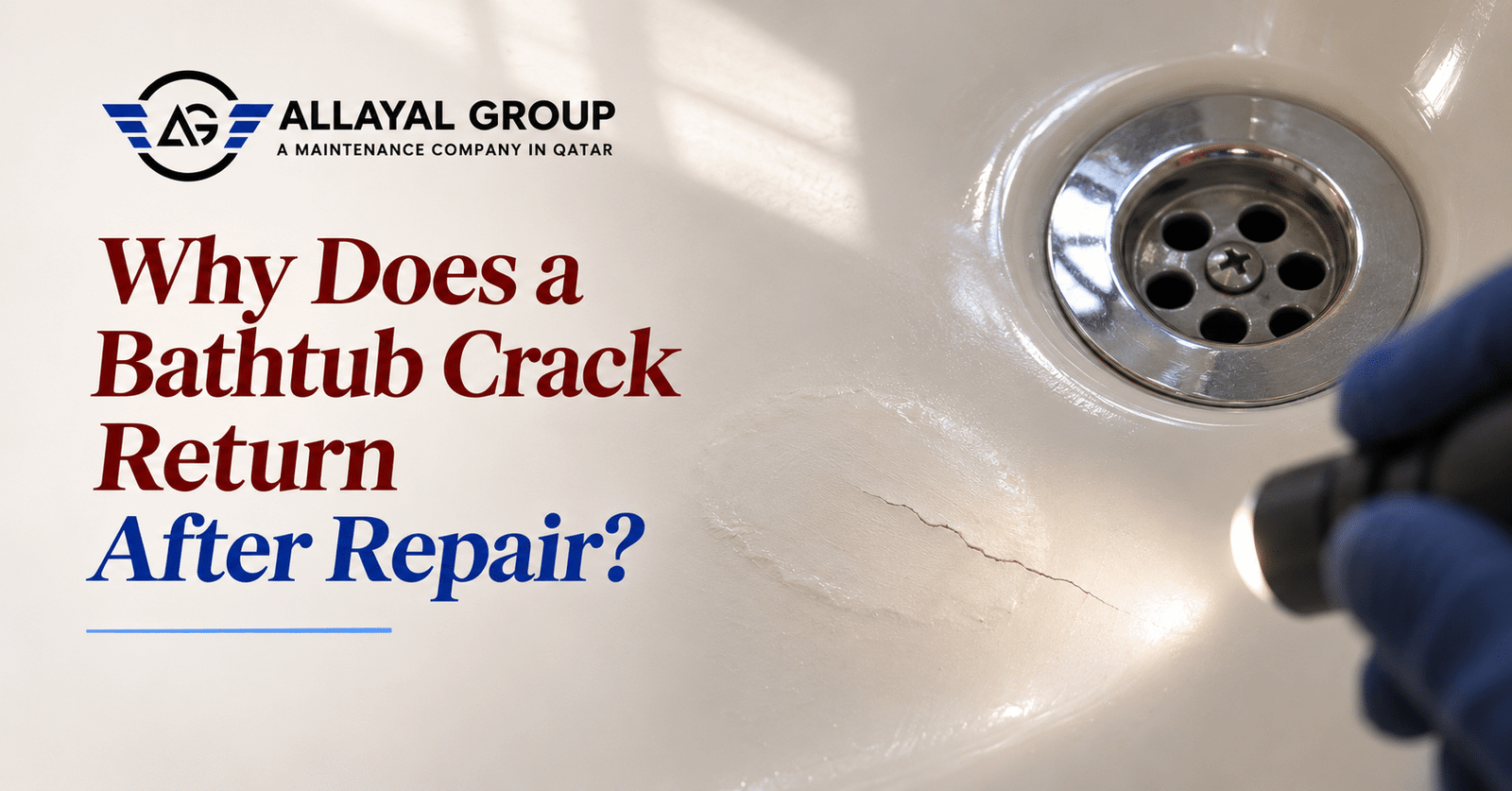
A bathtub crack can return when the tub floor still flexes, the original split extends beyond the patch, or the repair material loses its grip. Where the line returns matters. A line through the middle of a patch raises questions about movement underneath. An edge that curls or flakes points towards a problem with the finish. Allayal Group Maintenance Company
If the tub feels soft underfoot, the split is growing, or water appears outside the bath, stop using it and arrange an inspection. Leave the tub empty. A photo of the dry surface is more useful than filling the bath to see whether it leaks again. Allayal Group Maintenance Company
Why would the same spot crack twice?
Picture a repaired line beside the drain of an acrylic bathtub. The finish looks smooth when the bath is empty. During ordinary use, someone stands in that spot and the floor dips slightly. Each time the shell bends, the edges of the old split can pull apart again. A colour-matched patch can cover the line while leaving that movement unresolved. Allayal Group Maintenance Company
The support underneath matters. Depending on the model, an acrylic tub may rely on support feet, a supporting bed, or both. Kohler’s installation guidance, for example, specifies where particular baths must carry weight and cautions against hanging them from the rim. A level rim and tidy surrounding tiles tell you little about whether the feet underneath are bearing weight correctly.
What can the shape of the returning line tell you?
Look at the dry tub in daylight or shine a light across it from the side. Find the outline of the previous repair, if visible, and see where the new mark begins and ends. These observations help a technician decide what to examine first.
| What you notice | What to ask the technician to check |
|---|---|
| A fine line follows the original split through the patch | Whether the shell flexes at that point and how the base is supported |
| A thin edge lifts around the outline of the patch | Whether the coating has separated from the surface beneath it |
| The line continues past one end of the patch | How far the damage extends into the surrounding material |
| Dampness appears near the drain or on the ceiling below | Whether water is escaping through the shell, the drain fitting or another connection |
When is the previous repair itself the problem?
A chip and a moving crack call for different repairs. A chip leaves a small piece missing from an otherwise firm surface. A crack can have two edges that move independently. Cramer, for example, specifies that its bath repair kit is intended for impact chips on a sound surface and excludes hairline and movement cracks. A patch can therefore fail even when the person applying it followed the mixing instructions.
Timing helps narrow the questions. If a patch lifted soon after the first bath, tell the technician which product was used, how the area was prepared and how long it stayed dry. If it lasted for months and reopened where the floor now feels soft, describe that change. For a rented villa, the previous work order may contain details the current resident never received.
What should you record before booking bathtub repair?
Take one close-up with a ruler beside the crack and one wider photo showing its position relative to the drain, wall or standing area. Record the repair date, when the line returned and any movement you had already noticed during normal use. Avoid pressing on the spot to demonstrate it.
For property managers arranging bathtub maintenance in Qatar, a precise work order helps. “The line reopened beside the drain three weeks after repair, and the tenant noticed dampness below” gives the contractor two things to investigate. Include any earlier photos so the technician can compare the length and direction of the split.
Can the bathtub be repaired again, or does it need replacing?
A second repair may be reasonable if the damage is localised, the surrounding shell is sound and the cause of the first failure can be addressed. Ask what the proposed work covers: the finish, the shell, the support underneath, or a leaking fitting. Those are different jobs, even when the visible symptom is a single line.
If access beneath the bath is limited, ask what the technician can confirm before tiles or panels are disturbed. For bathtub repair in Doha or Al Rayyan, Allayal Group can assess the damage and discuss the options. Call or WhatsApp +97430109035 with your photos and previous repair details. Explore Allayal Group’s bathtub repair services. Allayal Group Maintenance Company
Frequently Asked Questions
Does a hairline crack mean my bathtub is leaking?
A visible line alone cannot confirm a leak. Damp flooring, a water mark on the ceiling below or moisture near an access panel warrants inspection. Allayal Group’s Bathtub Doctor in Qatar guide describes other signs to look for. Allayal Group Maintenance Company
Should I apply another layer of filler?
Leave the old patch visible until the cause is assessed. Another layer can hide the edges a technician needs to inspect, and cosmetic filler cannot correct movement beneath the tub.
What should I ask before approving a second repair?
Ask three questions: What caused the first repair to fail? How will this repair address that cause? When can the bath take weight and water again? The answers will help you compare quotes and plan when the bathroom can return to use.